Nail changes that may be seen in psoriasis. Note the pitting, yellowing, and ridging
Erythrodermic psoriasis
bufferLOL
Clincal
Presentation
Symptoms
Physical Exam
Expand all +
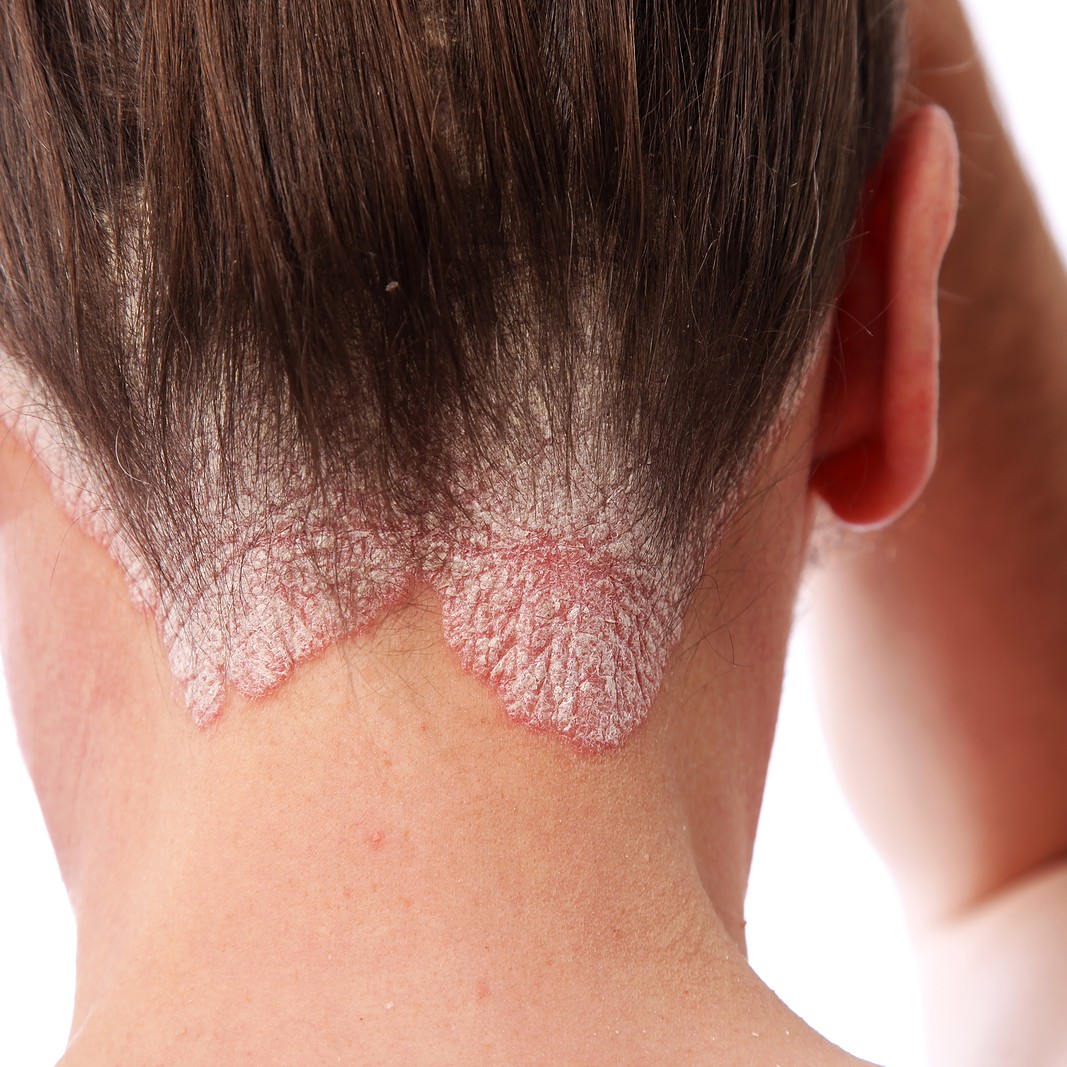
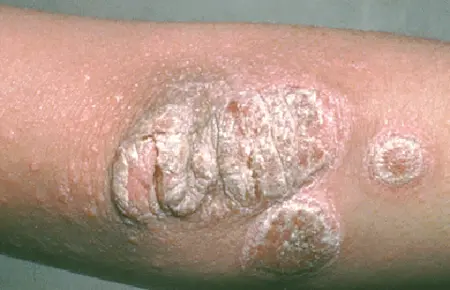
Plaque psoriasis +
the most common form and it occurs in about 90% of patients.It usually begins with red scaly patches. The symptoms can range from mild to severe, covering very small or extensive areas of the body.
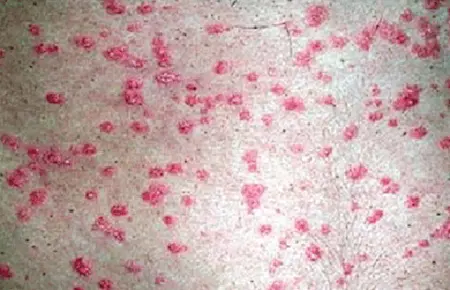
Guttate psoriasis +
Typically abrupt onset appearing in a few weeks, often extensive. Marked by lesions that are small and “drop-like”, which often appear on the trunk (i.e. lower back), arms, legs or scalp. It makes up about 10% of psoriasis cases and is the second most common form. It often develops following an upper respiratory infection, often strep throat, which acts as the trigger. Guttate psoriasis can resolve on its own without treatment, and the individual may never develop psoriasis again. Or it can become recurrent throughout life.
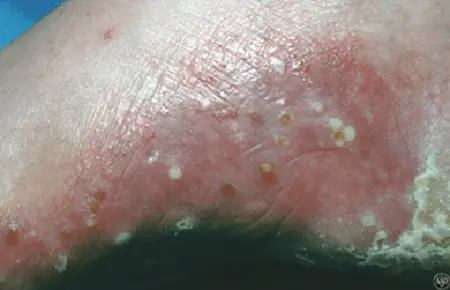
Pustular psoriasis +
Characterized by pustules and can sometimes be disabling and life-threatening. It can be localized or widespread. If localized, the pustules are usually confined to the palms and soles of the feet. Scales gradually form as pustular lesions dry out.
Inverse psoriasis +
Occurs in skin folds such as between buttocks, the genitals, under breasts and armpits. These lesions are smooth and red as opposed to raised and scaling.
Erythrodermic psoriasis +
Rare but serious form of disease marked primarily by widespread redness and inflammation that resembles sunburn. It can result from severe sunburn, using certain medications (i.e. oral corticosteroids, lithium) or suddenly stopping psoriasis treatment. It can also stem from poorly controlled psoriasis. It can be life-threatening and usually requires hospitalization since the skin loses its ability to perform vital functions, such as controlling body temperature and protecting against infectious organisms.